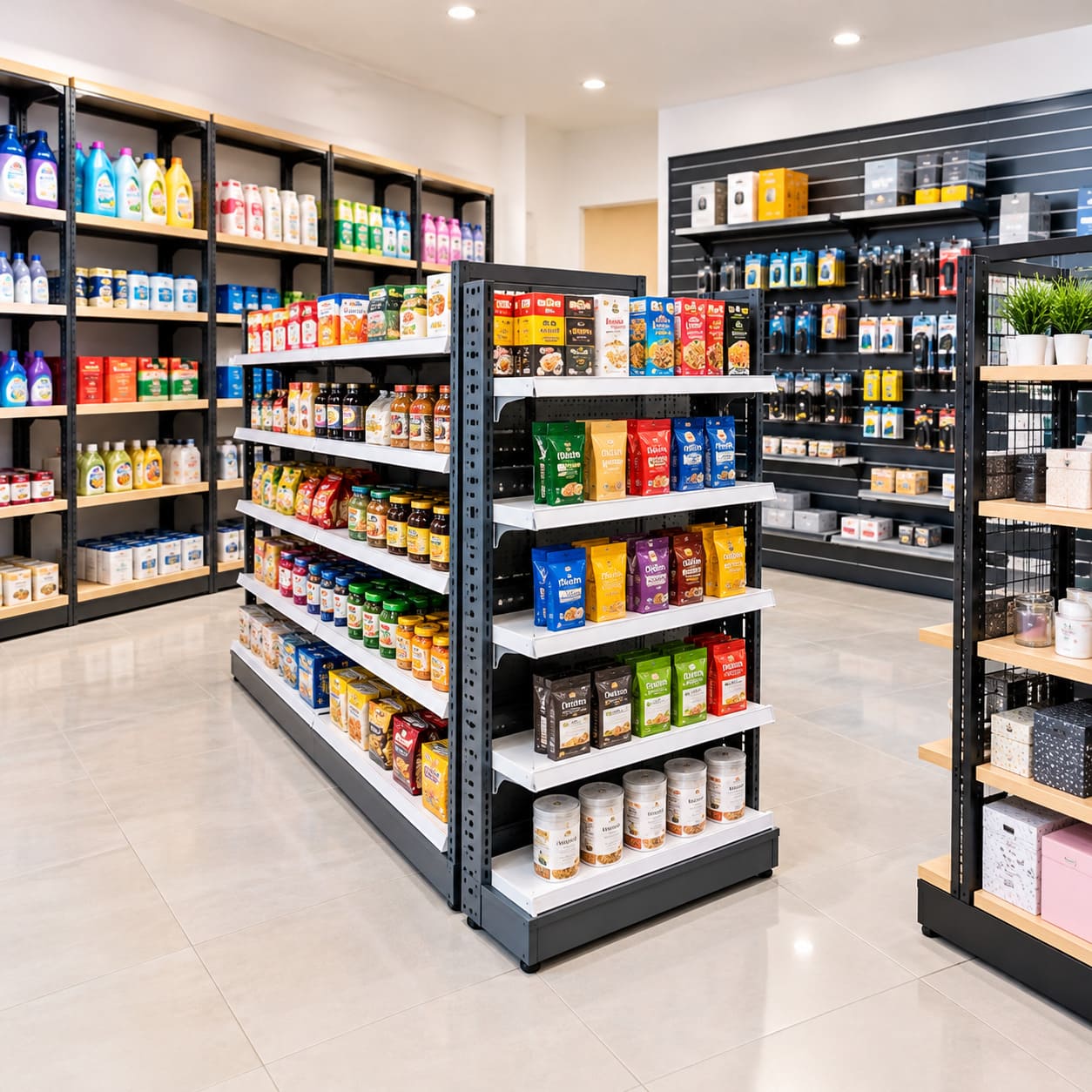
When you’re fitting out a shop, shelving probably isn’t the first thing that gets you excited. Still, it’s one of those decisions that can have a surprisingly big impact on how your store works.
Good shelving gives your products a proper place, keeps the shop looking tidy, and makes it easier for customers to find what they’re after. It can also help you squeeze more value out of the space you’ve got, which matters when every square metre counts.
If you’re looking to buy shop shelving in the UK, you’ll quickly find there’s no shortage of options. You’ve got gondola shelving, wall-mounted units, display shelves, heavy-duty systems and plenty of adjustable designs to choose from.
So, where do you start?
The easiest approach is to forget about the shelving for a moment and think about your shop first. What are you selling? How much space do you have? How heavy are your products? And how do you want customers to move around the store?
Once you’ve answered those questions, choosing the right shelving becomes much easier.
What Type of Shop Shelving Do You Need?
There’s no magic shelving system that works for every shop.
A small convenience store might need rows of practical shelving for groceries and household products. A hardware shop will probably need something stronger for tools and equipment. A boutique, on the other hand, may be more concerned with presentation than maximum storage capacity.
Before you start comparing products, make a quick list of what you need your shelving to do.
Think about:
- What you’re selling
- The size and weight of your products
- How much stock you want customers to see
- How much wall and floor space you have
- Whether you need adjustable shelves
- How frequently your layout might change
- The style you want for your shop
- Your overall budget
It might seem like a bit of homework, but it’ll save you a headache later.
Why Is Gondola Shelving So Popular?
Walk into many retail stores and you’ll probably see gondola shelving. There’s a reason for that.
It’s versatile, easy to configure and suitable for all sorts of products. Single-sided units work well against walls, while double-sided gondola shelving is useful in the middle of a shop, where it can create aisles with products on either side.
The other big advantage is flexibility.
Many gondola systems have adjustable shelves, so you’re not stuck with the same layout forever. Got a few tall bottles to display? Move a shelf up. Selling smaller boxes instead? Lower it again.
That’s especially handy for retailers whose stock changes throughout the year.
Is Wall-Mounted Shelving a Good Option for Small Shops?
If your shop is short on floor space, don’t forget about the walls.
Wall-mounted shelving allows you to make use of vertical space without filling the floor with more furniture. You can install it around the edges of the shop, behind a counter, or in areas that might otherwise go unused.
It’s a particularly useful option for smaller stores where space is at a premium.
You can use wall shelving for everyday products, accessories, promotional items or additional stock. Pair it with freestanding gondola units and you can create a practical layout without making the shop feel packed.
The trick is not to go overboard. You want to make use of the walls without turning every inch into a display.
How Important Is Product Presentation?
Pretty important, actually.
A customer shouldn’t have to dig through a messy shelf to find what they want. When products are clearly arranged and easy to see, the whole shopping experience becomes more straightforward.
Try grouping similar products together. You could organise them by brand, product type, size, colour or price, depending on what makes sense for your business.
It’s also worth thinking about where particular products sit. Items you want customers to notice can be placed in prominent positions, while related products can be kept together to encourage browsing.
And don’t cram the shelves just because you’ve got the space. A little breathing room can make your products look much better.
Sometimes, less really is more.
What Shelving Is Best for Heavy Products?
If you’re selling heavy goods, strength needs to come first.
Heavy-duty shelving is designed for products that would put too much strain on standard display systems. Depending on your business, that could mean tools, drinks, equipment, hardware or boxed materials.
Before buying anything, check the manufacturer’s stated load capacity. Don’t simply look at a shelf and assume it’s strong enough.
It’s also important to distribute weight properly. Putting all the heavy items in one area isn’t a great idea, even when the shelving has a high load rating.
If you’re unsure about the right capacity, it’s better to speak to the supplier before placing your order.
Why Choose Adjustable Shelving?
Retailers rarely keep exactly the same products forever.
One month you might have a large seasonal range, and the next you’ll need more room for a completely different collection. That’s where adjustable shelving earns its keep.
Being able to move shelves up and down means you can change your displays without replacing the whole system.
It also makes it easier to make better use of vertical space. Taller products can have the room they need, while smaller products can be displayed closer together.
For a growing business, that flexibility can be worth its weight in gold.
How Do You Measure Your Shop for Shelving?
This is one part you really don’t want to rush.
Before ordering anything, measure the areas where you plan to install shelving. Check the wall length, available height and floor space, and make a note of anything that could get in the way.
That includes:
- Doors
- Windows
- Counters
- Columns
- Radiators
- Electrical sockets
- Entrances and exits
- Other permanent fixtures
If you’re using freestanding shelving, measure the floor area carefully too.
And remember to leave enough room for customers to move around. There’s no point gaining a few extra shelves if people can barely get down the aisle.
A good retail layout should feel comfortable, not cramped.
Can Shop Shelving Make Stock Management Easier?
Absolutely.
When products have clear, consistent locations, staff can find things much faster. It’s easier to spot when something is running low, restock the shelves and carry out stock checks.
It also helps new employees get familiar with the store. If everything has its own place, they won’t need to ask where every product belongs.
These might seem like small benefits, but over time they can save your team quite a bit of work.
How Much Should You Spend on Shop Shelving?
There’s no single answer because shelving prices vary depending on the size, material, design, capacity and quantity you need.
It’s tempting to go for the cheapest option, particularly if you’re fitting out a whole store. But that can be a false economy.
Think about how often the shelving will be used and what you’ll be putting on it. A sturdy, adjustable system may cost more at the beginning, but it could last longer and give you much more flexibility.
When comparing prices, look at the complete package rather than just the price of one shelf. You may also need uprights, brackets, base shelves, hooks, baskets, end panels and other accessories.
If you’re considering commercial shelving and retail fitting solutions, Shop Solutions Midlands is another supplier you could look at when planning your shop setup.
How Can You Make Your Shelving Look Professional?
You don’t need fancy fixtures or an enormous refurbishment budget to make your shelves look good.
Start by keeping things simple.
Group similar products together, keep packaging facing forwards and avoid letting shelves become overcrowded. Make sure prices and product information are easy to see.
Depending on what you’re selling, shelf dividers, hooks, baskets and signage can also help keep everything organised.
Think about your shelving as part of the customer experience, rather than just somewhere to put stock.
A clean, tidy and easy-to-navigate shop will always make a better impression.
What Mistakes Should You Avoid?
A few common mistakes are worth watching out for when buying shop shelving.
Not measuring properly: Even a small difference in dimensions can cause problems during installation.
Ignoring weight limits: Always check the manufacturer’s load rating, especially for heavier products.
Buying too much shelving: More shelving doesn’t automatically mean more sales. Customers still need room to browse.
Choosing looks over practicality: Attractive shelving is great, but it needs to work for your products too.
Forgetting about future changes: Your stock range will probably change, so adjustable and modular shelving can give you more freedom later.
Should You Buy New or Used Shop Shelving?
There’s a place for both.
New shelving gives you more choice when it comes to size, finish, layout and accessories. It’s often the easier option if you’re fitting out a new store and want everything to match.
Used shelving can be worth considering if you’re working with a tighter budget. Commercial shelving can remain perfectly useful for years, provided it’s in good condition.
If you’re buying second-hand, check the shelves carefully before committing. Look for damage, missing parts, signs of excessive wear and any issues that could affect stability or load capacity.
What’s the Best Shop Shelving for Your Business?
At the end of the day, the best shelving is the shelving that works for your shop.
Don’t choose a system simply because it looks good in someone else’s store. Think about your products, your customers, your available space and how your business might change over time.
For some retailers, gondola shelving will be the obvious choice. Others may benefit from wall-mounted shelves, heavy-duty units or a combination of several different systems.
If you’re ready to buy shop shelving in the UK, start by measuring your space and working out exactly what you need. Compare load capacities, dimensions, materials and adjustability, and don’t forget to think about how the finished layout will feel for your customers.
Get those basics right and you’ll have shelving that doesn’t just hold your product. It’ll help your whole shop run more smoothly. Read more: Retail Equipment UK